Imagine you’re a high-performance sports car, and this intensive is like a super intense race that lasts for weeks! To keep performing your best and not break down, you need to refuel and get regular tune-ups. That’s what recovery is all about for dancers like you.
During intensives, where you’re training super hard and constantly, recovery means much more than just crashing on your bed at the end of the day. It’s the active process of recharging your body and mind after all the physical and mental effort you put in. It’s about getting back to 100% so you can keep learning, growing, and dancing your best without getting hurt or burning out.
Think of it as a “balancing act”. You’re putting a lot of stress on your body and brain with all the training, learning new choreography, and refining your technique. But there are other stresses too, like new learning spaces, being away from home, or dealing with new peers. Recovery is how you balance all that stress with enough rest and repair so you can handle everything.

Here’s what recovery means for you during your intensives:
- It’s for your whole self: Recovery isn’t just about your muscles. It’s about your whole body and mind getting back to normal.
- Body Recharge: When you sleep, especially during deep sleep, your body goes into repair mode. It works to fix and grow your muscles, get rid of waste products that make you sore, and get you ready for the next day. If you don’t get enough sleep, your strength, how long you can dance, and your power can all go down, and you’ll get tired faster.
- Brain Boost: Your brain also needs recovery time. Sleep helps you learn new steps, remember choreography, focus in class, and deal with all the thoughts and feelings that come with intense training. If you don’t sleep enough, even just a couple of hours less, it can make it harder to focus, learn, remember, and even make quick decisions in class or rehearsal.
- Body Recharge: When you sleep, especially during deep sleep, your body goes into repair mode. It works to fix and grow your muscles, get rid of waste products that make you sore, and get you ready for the next day. If you don’t get enough sleep, your strength, how long you can dance, and your power can all go down, and you’ll get tired faster.
- Why is it so important right now? In an intensive program like this, not recovering enough can lead to some real problems:
- Getting Injured More Easily: When you’re tired, your technique might slip, and your body might not move as efficiently, which puts more strain on your joints and muscles. This can lead to injuries, especially those that build up over time. Studies have actually shown that young athletes who sleep less than 8 hours a night are much more likely to get injured.
- Feeling Totally Drained (Overtraining/Burnout): If you constantly push without enough recovery, you can hit “overtraining syndrome” or “burnout.” This means you might feel tired all the time, your mood can go down, and you might even start to lose your love for dancing.
- Not Dancing Your Best: Simply put, poor recovery means you won’t have the strength, stamina, or sharp focus needed to perform at your peak.
- Getting Injured More Easily: When you’re tired, your technique might slip, and your body might not move as efficiently, which puts more strain on your joints and muscles. This can lead to injuries, especially those that build up over time. Studies have actually shown that young athletes who sleep less than 8 hours a night are much more likely to get injured.
- Your Recovery Playbook (What you can do!): It’s super important to learn how your body recovers best, instead of just “pushing through” pain or exhaustion, which can be common in dance.
- Make Sleep Your Top Priority: This is probably the most important thing you can do. While 7-9 hours is generally good for young adults, intense training means you probably need even more—like 9-10 hours if you’re a teenager. Try to go to bed and wake up around the same time every day, even on weekends. Make your bedroom dark, quiet, and a little cool. And try to avoid screens (phones, laptops) for at least an hour or two before bed, because the blue light can mess with your body’s natural sleep signals. If you can’t get a full night’s sleep, short naps (20-90 minutes) can give you a big boost in performance, mood, and how awake you feel.
- Listen to Your Body: Learn to recognize when you’re feeling tired, sore, or stressed. Simple check-in questions about how you feel each day can really help you become more aware.
- Be Okay with Discomfort (Psychological Flexibility): Dance can be tough, and you’ll feel uncomfortable sometimes. Psychological flexibility means you can notice those tough feelings and thoughts without letting them take over, so you can still do what’s important to you (like dancing well). This can help you sleep better too.
- Gentle Movement (Active Recovery): After a super intense class or rehearsal, doing some light, gentle movement for 6-10 minutes (like slow walking or gentle stretching) can help your body get rid of waste products and make you feel more refreshed.
- Manage Other Stressors: Remember that schoolwork or things happening at home can also impact how well you recover from dance. Being aware of these can help you manage your overall energy.
- Ask for Help: Don’t be afraid to talk to your family, friends, or teachers if you’re feeling stressed or overwhelmed. We know you’re training at a high level, so what happens when you feel pain? How do we recognize when we need help, and when our body as asking to pay attention?
- Make Sleep Your Top Priority: This is probably the most important thing you can do. While 7-9 hours is generally good for young adults, intense training means you probably need even more—like 9-10 hours if you’re a teenager. Try to go to bed and wake up around the same time every day, even on weekends. Make your bedroom dark, quiet, and a little cool. And try to avoid screens (phones, laptops) for at least an hour or two before bed, because the blue light can mess with your body’s natural sleep signals. If you can’t get a full night’s sleep, short naps (20-90 minutes) can give you a big boost in performance, mood, and how awake you feel.

Overall, focusing on recovery is like investing in yourself. By actively paying attention to your recovery needs, you’re building a strong foundation that will help you excel in this intensive, avoid injuries, and enjoy a long and healthy dance career.
THE DANCE|PREHAB PERSPECTIVE
Recovery isn’t just another checklist of things we turn to when we’re not feeling “good”. If you’re training and performing at a high level, chances are you aren’t going to feel good 100% of the time.
The hardest part about recovery is making it make sense. Just like training, your bodies are different, how we process food for nutrition might be different, some of us might need more opportunities to meditate, some of us might even need to do less dance. Recovery is never only physical, either.
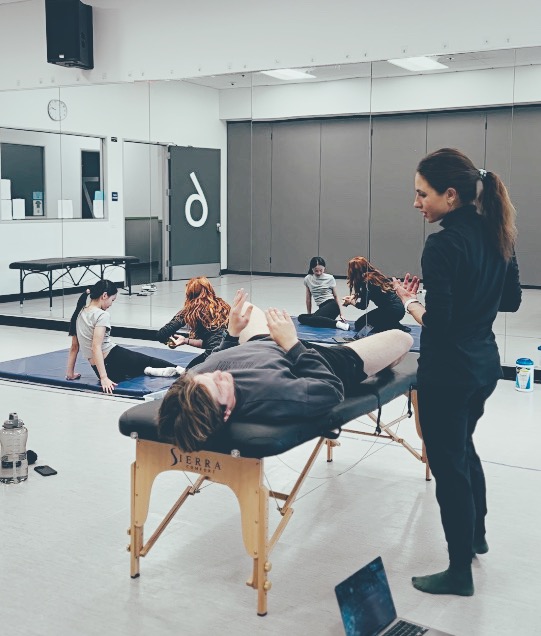
We’re helping dancers organize their training schedules, finding the right kind of tools, and most importantly, give space so you have a chance to have these types of conversations.
Sources:
Arbinaga Ibarzábal, Félix, et al. “Sleep Characteristics in Dance Students Related to Psychological Inflexibility.” Journal of Dance Medicine & Science, vol. 29, no. 1, Feb. 2025, pp. 3-12, doi:10.1177/1089313X241263651.
Driller, Matthew W., et al. “Investigating the sleep habits in individual and team-sport athletes using the Athlete Sleep Behavior Questionnaire and the Pittsburgh Sleep Quality Index.” Sleep Science, 2021, p. e20210031, doi:10.5935/1984-0063.20210031.
Hatia, Madjer, et al. “A Narrative Review of the Impact of Sleep on Athletes: Sleep Restriction Causes and Consequences, Monitoring, and Interventions.” Cureus, vol. 16, no. 12, 30 Dec. 2024, p. e76635, doi:10.7759/cureus.76635.
Hooper, S. L., et al. “Markers for Monitoring Overtraining and Recovery.” Medicine & Science in Sports & Exercise, vol. 27, no. 1, Jan. 1995, pp. 106-12.
Mayes, Susan, et al. “Wellness Monitoring for Professional Ballet Dancers A Pilot Study.” Journal of Dance Medicine & Science, vol. 25, no. 1, 2021, pp. 16-24.
Ortiz, Robert O., Jr., et al. “A Systematic Review on the Effectiveness of Active Recovery Interventions on Athletic Performance of Professional-, Collegiate-, and Competitive-Level Adult Athletes.” The Journal of Strength and Conditioning Research, 2018, pp. 000-000, doi:10.1519/JSC.0000000000002589.
Sawczuk, Thomas, et al. “Relationships Between Training Load, Sleep Duration, and Daily Well-Being and Recovery Measures in Youth Athletes.” Pediatric Exercise Science, vol. 30, no. 3, 2018, pp. 345-52, doi:10.1123/pes.2017-0190.
“Self-Reported Perceptions of Sleep Quality and Resilience Among Dance Students.” Perceptual and Motor Skills, vol. 125, no. 2, 2018, pp. 351-68, doi:10.1177/0031512518757352.
Temm, Dani A., et al. “Training, Wellbeing and Recovery Load Monitoring in Female Youth Athletes.” International Journal of Environmental Research and Public Health, vol. 19, no. 18, 12 Sept. 2022, p. 11463, doi:10.3390/ijerph191811463.
Walsh, Neil P., et al. “Sleep and the athlete: narrative review and 2021 expert consensus recommendations.” British Journal of Sports Medicine, vol. 55, 2021, pp. 356-68, doi:10.1136/bjsports-2020-103020.
Vitale, Kenneth C., et al. “Sleep Hygiene for Optimizing Recovery in Athletes: Review and Recommendations.” International Journal of Sports Medicine, vol. 40, no. 8, Aug. 2019, pp. 535-43, doi:10.1055/a-0905-3103.

Leave a Reply