WHAT IS PHYSICAL/MOVEMENT LITERACY?
By definition, physical/movement literacy is defined as “the mastering of fundamental movement skills and fundamental sports skills”, with an emphasis on moving proficiently in a variety of physical activities with confidence, competence and enthusiasm.
A great way to remember this is the ABCS:
AGILITY + BALANCE + COORDINATION + SPEED
“The concept of physical literacy is not a physical trait but rather a behavior that needs to be developed, maintained, and embraced throughout the lifecourse…The journey of physical literacy can be viewed along a continuum that may be influenced both positively and negatively by life experiences and interactions with the physical world.”
(Understanding Physical Literacy in Youth, Faigenbaum et al, 2018)
THE WHY
For many dancers and growing artist-athletes, the adolescent years are a time of physiological and psychological change, yet these are the time periods where they are tasked with significantly increased dance training demand, particularly pre-professionals. Often, peak performance is expected before full physical maturation. The nature of increased training during periods of growth and maturation for many dancers, means there is an increased need for establishing and re-establishing strong fundamental human movements. Through movement, life-long adaptations can be made to address aspects such as a more robust nervous system and/or increase bone density building.

Beyond the aspects of physical training and movement, environments and experiences that promote physical literacy allow the dancer to look at and learn about themselves beyond the confines of dance. Who are they as humans? When the expectations of dance movement and training fall away, what is left and how can an environment be provided for them to explore these aspects of themselves?

THE DANCE|PREHAB PERSPECTIVE:
Our mission here at DANCE|PREHAB is to set a new standard in the education of the 21st century dancer: Being a strong human so you can be a strong dancer. We do this by:
- Creating movement experiences with an emphasis on movement proficiency to benefit long term health in their dance learning and training contexts.
- Creating consistent and accountable spaces for conversation, dialogue, and learning (via DANCEPREHAB Educator’s Health Compass).
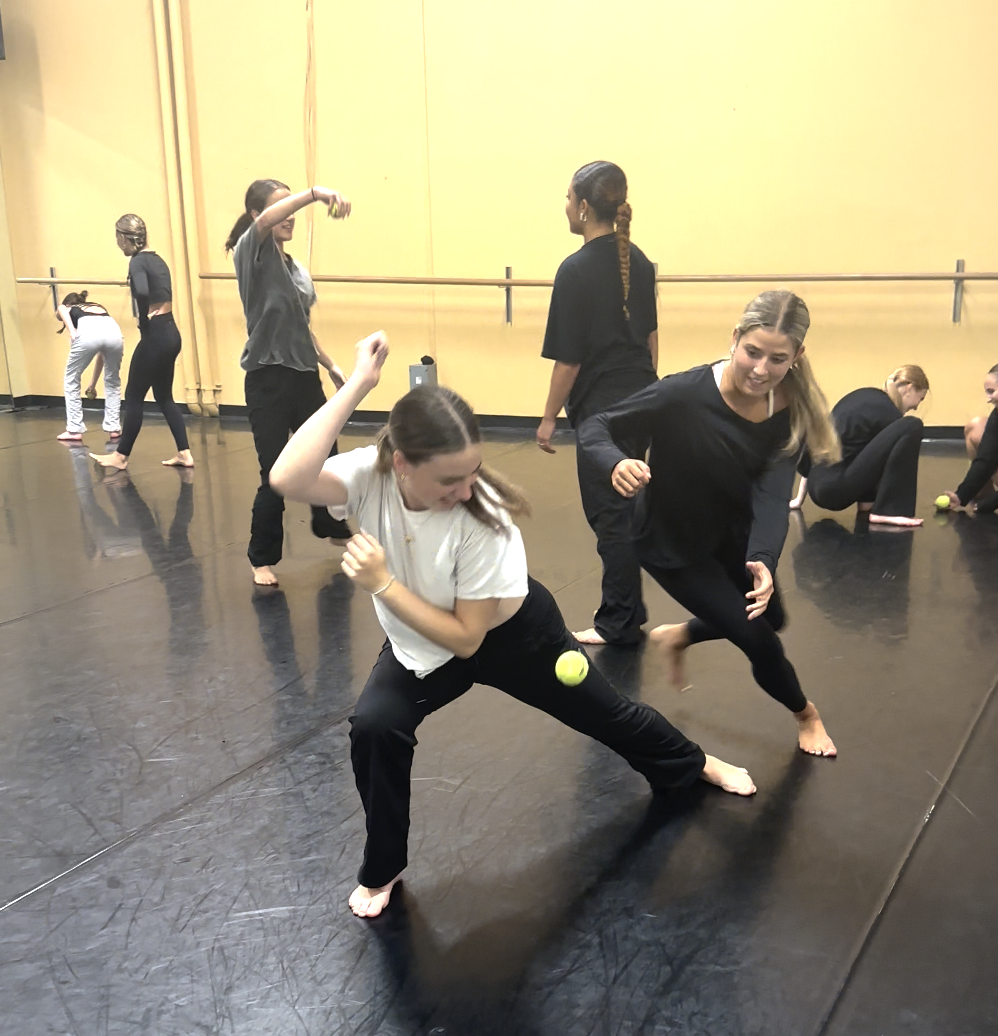
- Utilizing fun, games, and as always, a *healthy* dose of competition to remind them that they can still tap into the child inside.
The emphasis we place on movement literacy in rehab and prehab training for the dancers at DANCE|PREHAB is a direct result and our response to what we see in our community when we meet them in our clinical spaces. In the clinical and healing context, we are often starting with square one with dancers. We are teaching young movers how to squat, how to hinge, how to efficiently and proficiently use their bodies in a human context. In training, movement literacy is analogous to learning or speaking different movement languages. This extends beyond dance styles, but rather addresses the human qualities required FOR dance.
Beyond movement itself, introducing physical literacy is also about introducing movement relationships to oneself, others, and the space. Physical literacy therefore is not just an activity, but rather an exploration of identity outside of dance movement. Environments and relationships inform our desire to move, and vice versa, hence our saying, “Movement is an experience and experiences inform the mover.” How might we give the dancer and opportunity to exist with movement outside of their dance bodies? Let’s uplift the next generation of movement artists.
“Rather than valuing lighter-than-air thinness, I valued weightedness and seeing how bodies could play with gravity. Instead of seeking endless lines, I sought how the spine and hips could spiral and arc. Extensions mattered less than intention in movement, and an appreciation of autonomy mattered more than standards of aptitude.”
-excerpt from “The Cost and Contradictions of Ballet”, by Glory Liu | The Nation


Leave a Reply to Building Stronger Dancers: Why Resistance Training Matters in Your Recovery and TrainingCancel reply