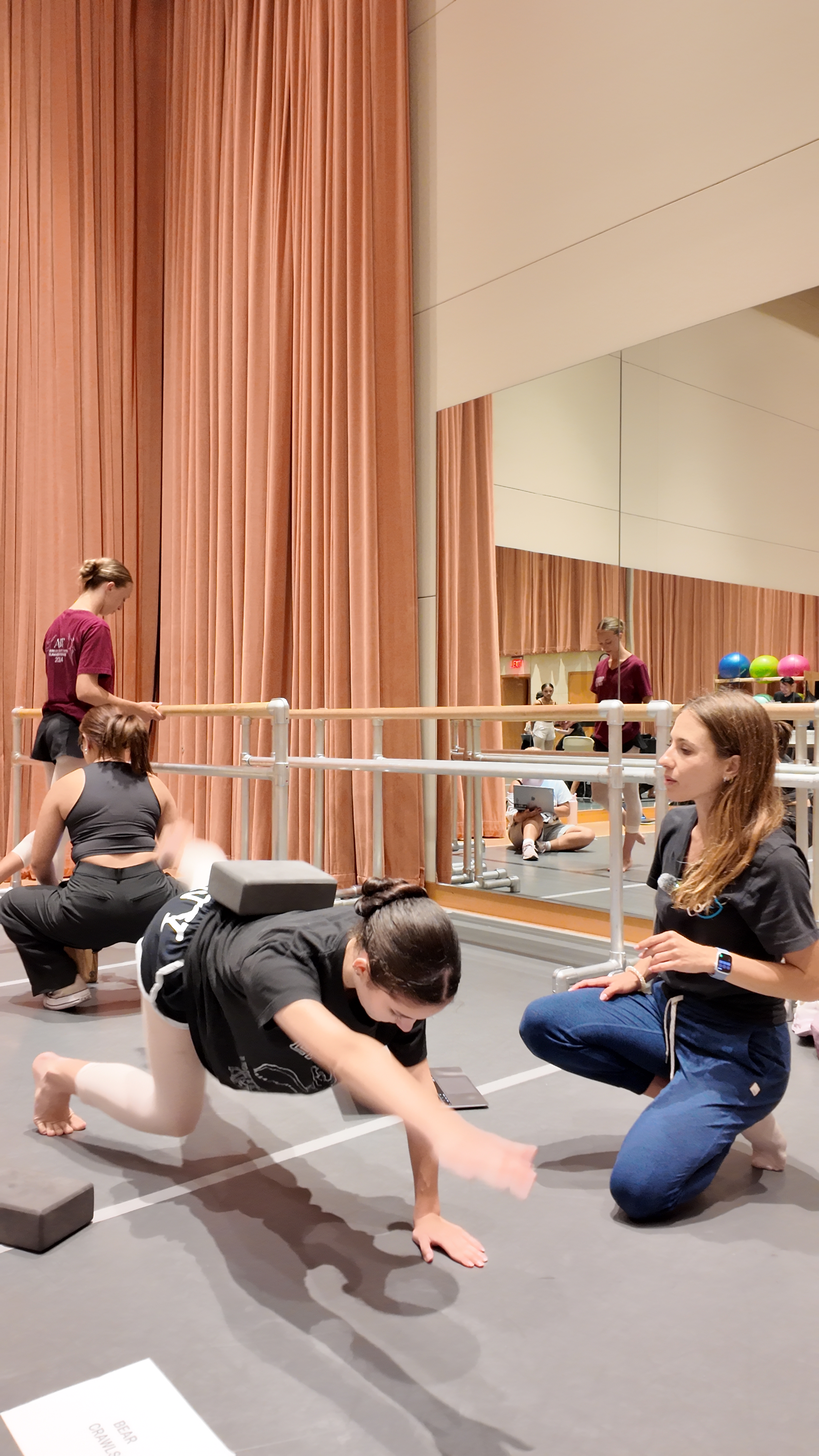
Spring is the peak of the dance calendar, and with it comes a familiar, predictable pattern we see every year at DANCEPREHAB. Competitions, auditions, conventions, and year-end recitals pile up on the schedule. The talent and skills come out. Oftentimes, so does the KT tape.
And quietly, so do the injuries.
When the season gets heavy, dancers and families often shift into what can be best described as survival mode. The goal becomes managing pain just long enough to get through the next event: ice it, wrap it, push through. With the promise that “we’ll deal with it after recital.” The hard conversations about rest and recovery get deferred, again and again.
We understand. We see it. And we want to offer a different perspective.
The Question We Hear Most
When a dancer is hurting, one of the first things parents ask us is: “What exercise can we do to fix this?”
It’s a natural question. As a dance community, we’ve been taught to problem-solve through doing more. There’s a stretch, a strengthening exercise, a balance drill. Surely something will work.
Here’s what we want you to hear, with care and directness:
No exercise can out-train an overloaded schedule.
Load management, the deliberate balancing of training demands with adequate recovery, is not a training add-on. It is the intervention. And during spring season especially, it may be the most important health decision you make for your dancer.
Why Injuries “Happen” in Spring
Dance injury rates are among the highest of any performing art or sport, reported as high as 97% across disciplines and skill levels, with overuse injuries leading the way. Overuse injuries aren’t the result of one dramatic moment. They’re the result of repeated, accumulated stress applied to tissues that haven’t had enough time to adapt and rebuild.
Spring often exposes this problem.
Dancers who have been training at a moderate volume through the fall and winter are suddenly thrust into the highly physical demands of competition routines, often all at once. Fatigue increases. Movement quality decreases. And the body, doing its best to keep up, starts signaling for help in the form of pain.
When that pain is managed with tape and willpower rather than rest and recovery, we move deeper into injury territory, not out of it.
One critical concept worth understanding: pain levels may drop before tissue healing is complete. This creates a false sense of readiness. A dancer feels better but is still highly vulnerable. Returning to full intensity during this window is one of the most common reasons we see reinjuries.
The Body as a Bank Account
At DANCE|PREHAB, we often explain health as an investment.
Think of your dancer’s body like a bank account.
Every class, rehearsal, and performance is a withdrawal. Sleep, nutrition, and rest days are deposits. When withdrawals consistently outpace deposits, you’re not just running low. You’re heading toward an injury.
When a dancer is already in a state of physical depletion, 15 hours of class, 10 hours of rehearsal, competition weekend, adding injury prevention exercises to that schedule isn’t prehab. It’s more stress on a system that’s already asking for less.
You cannot correct an overuse injury by adding more use.
What Load Management Actually Looks Like
Load management isn’t about doing less forever. It’s about being intentional, progressing training demands in a way that respects the body’s capacity to adapt. Here’s how families can start:
Track how hard the work actually feels. You don’t need special equipment. Ask your dancer to rate how hard each rehearsal or class felt on a scale of 1 to 10. This is called Rate of Perceived Exertion (RPE). If they’re logging 9s and 10s every single day, that’s useful, honest information. It means the system needs a deposit.
Respect the timeline of healing. Healing tissues need carefully controlled stress, not competition weekends back to back. Return-to-dance progression should be based on criteria, not just how the dancer feels on a given morning. This is something we work through with dancers and families together, making sure the path back is safe and sustainable.
Be willing to advocate for your dancer. This might be the hardest part. Spring carries enormous social and financial pressure to show up, perform, and push through. But as the adult in your dancer’s ecosystem, you have the power to say no to the extra convention, the additional routine, the double competition weekend. It’s never an easy conversation, and we’re here to supoort you through it, if need be.
More is not always better. Better is better.
A Note on the Whole Human Behind the Dancer
At DANCE|PREHAB, we approach dancers as artist-athletes, and as kids, adolescents, and young adults who are still growing into themselves. Injury and overload don’t just affect the body. They affect confidence, identity, and relationship to the art form.
Getting through spring successfully doesn’t require a secret conditioning program. It requires a community of parents, teachers, coaches, and healthcare providers who are willing to zoom out, see the full picture, and prioritize long-term health over short-term performance.
If your dancer is navigating the spring season with pain, fatigue, or uncertainty, we’d love to be part of that conversatione). Recovery can be a time for growth, learning, and rediscovery.


Leave a Reply