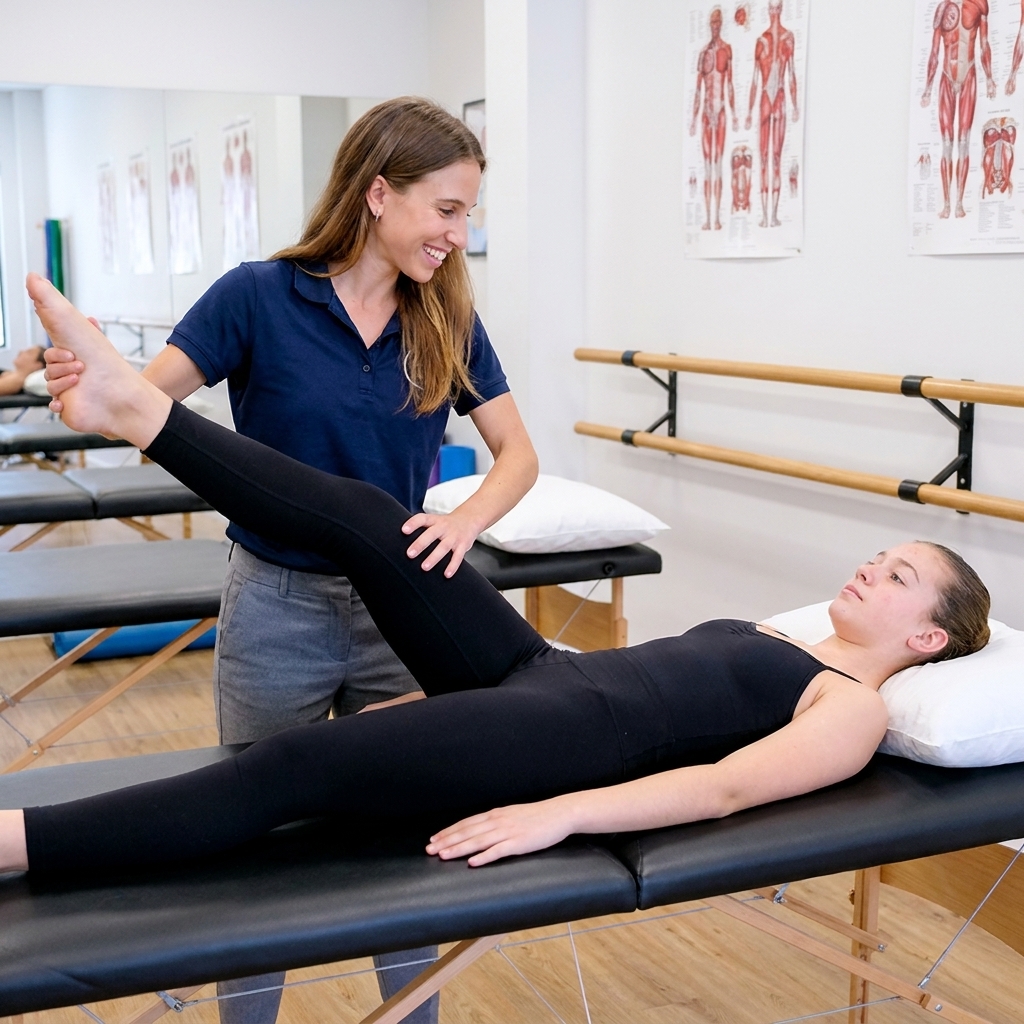
You are pushing through rehearsals with a nagging hip, a sore Achilles, or a child who keeps limping off the studio floor. Before you book anything, you want to know what to expect. That is a fair question, and you deserve a clear answer.
This guide explains how care works at DANCEPREHAB Physical Therapy and Performance and what shapes the value of your visits. Rather than listing fees, we want you to understand the model so you can make a confident decision about physical therapy in Laguna Hills, CA.
Why There Is No One-Size-Fits-All Answer
Physical therapy is not a single product. A dancer returning from an ankle sprain needs something very different from a studio preparing a company for a performance season.
Your care plan depends on several factors:
- The condition or goal, such as hip pain, shin splints, or injury prevention
- Your dance schedule, including competitions, auditions, and performances
- The testing and tools your plan requires
- Whether you are a youth dancer, a pre-professional, or a working performer
A personalized plan starts with a thorough evaluation, not a generic template.

How the Self-Pay, Out-of-Network Model Works
DANCEPREHAB Physical Therapy and Performance operates as a self-pay, out-of-network practice. This means your care is built around what your body and your dance demands require, not around limits set by outside parties.
For you, that model supports a few important things:
- Full 60-minute sessions with your physical therapist
- No overlapping appointments, so your clinician is focused on you the entire time
- Treatment decisions guided by your goals, your technique, and your performance calendar
Many dancers come to DANCEPREHAB after feeling rushed in busy clinics. Here, you get the time to be heard, assessed, and treated properly.
What Dance-Specific Care Actually Looks Like
The clinicians at DANCEPREHAB understand what a demanding rehearsal week feels like and how choreography loads your joints. That context shapes every aspect of your care.
Care Built Around Your Technique
Generic rehab often tells dancers to simply rest. A modify rather than remove approach keeps you training safely while you heal. The goal is to preserve your strength, coordination, stamina, and confidence so you are not starting from scratch when you return to full performance.
Objective Tools That Show Real Progress
Depending on your needs, your plan may include movement screening, isokinetic testing, return-to-sport testing, and vestibular balance assessment. Treatments such as blood flow restriction (BFR), neuromuscular re-education, and plyometric progressions replace guesswork with measurable data about your readiness.
Conditions and Goals We Support
The team at DANCEPREHAB supports dancers through orthopedic, sports, and performance physical therapy. Common concerns include:
- Hip pain, hip impingement (FAI), and labral tears
- Ankle sprains and Achilles tendinopathy
- Shin splints and other overuse injuries
- Low back pain and sciatica
- Shoulder pain, rotator cuff issues, and frozen shoulder
Treatment may combine manual therapy, therapeutic exercise, myofascial release, cupping, IASTM, and progressive plyometrics tailored to the demands of dance.

How Studios and Families Can Plan Ahead
The most effective care often happens before an injury occurs. Prehab and performance screening are available directly to dance studios and programs, helping dancers identify vulnerabilities before they become setbacks.
Age-appropriate health education and shared language with teachers and directors help everyone communicate clearly about readiness and limitations. You should never be left translating medical terms on your own.
What Is the Best Next Step?
The clearest way to understand what your care will involve is to connect with the team at DANCEPREHAB. Share what is happening, what is coming up on your dance calendar, and what you hope to achieve. The team will explain how your plan would work and answer your questions honestly.
You can learn more about the clinicians at DANCEPREHAB, explore physical therapy services for dancers, or read more on the DANCEPREHAB blog. When you are ready, visit DANCEPREHAB Physical Therapy and Performance to book your appointment. Your dancing deserves care from people who truly understand it.
Leave a Reply